A család és a házimunka – Family and housework
Tételszám: #2 | Kategória: Személyes vonatkozások, család | Szint: Középszint szóbeli (2026)
1. Miről szól ez a tétel?
A hivatalos követelmény szerint a Személyes vonatkozások, család témakörbe tartozik a családi élet, a családi kapcsolatok, valamint a család mindennapjai és az otthoni teendők. Ez a tétel a családszerkezetet és a házimunkát kéri.
Két csapda van benne:
- A rokonságnevek. Sok diák elakad a sógor, unokatestvér, após szavaknál. Ezeket egyszer meg kell tanulni.
- A házimunka igéi. A magyar „takarít" helyén az angol tucatnyi külön kifejezést használ (do the washing-up, hoover, dust), és a társalgásban sokat ér, ha minél többet fel tudsz sorolni belőlük.
2. Kulcsszókincs — család és rokonság
| Angol | Magyar |
|---|---|
| immediate family | szűk család (szülők, testvérek) |
| extended family | tágabb család (nagyszülők, unokatestvérek) |
| relatives | rokonok |
| siblings | testvérek (fiú és lány együtt) |
| only child | egyke |
| twins | ikrek |
| cousin | unokatestvér (fiú és lány is!) |
| nephew / niece | unokaöcs / unokahúg |
| in-laws | após-anyós, sógorság |
| father-in-law / mother-in-law | após / anyós |
| brother-in-law / sister-in-law | sógor / sógornő |
| single-parent family | egyszülős család |
| nuclear family | nukleáris (kétgenerációs) család |
| to be brought up / raised by | valaki neveli fel |
| to get on well with somebody | jól kijönni valakivel |
⚠️ A cousin nemtől független — nincs külön szó a fiú és a lány unokatestvérre. Ha fontos, mondd: my male cousin / my cousin Peter.
3. Kulcsszókincs — házimunka (household chores)
| Angol | Magyar |
|---|---|
| to do the washing-up / the dishes | elmosogatni |
| to load / unload the dishwasher | be-/kipakolni a mosogatógépet |
| to do the laundry | kimosni |
| to hang out the washing | kiteregetni |
| to iron | vasalni |
| to hoover (GB) / to vacuum (US) | porszívózni |
| to mop the floor | felmosni |
| to dust | port törölni |
| to tidy up | rendet rakni |
| to take out the rubbish (GB) / trash (US) | kivinni a szemetet |
| to make the bed | beágyazni |
| to water the plants | megöntözni a növényeket |
| to walk the dog | sétáltatni a kutyát |
| to do the shopping | bevásárolni |
| labour-saving device | munkát megkönnyítő háztartási gép |
Gépek (labour-saving devices): washing machine (mosógép), tumble dryer (szárítógép), dishwasher (mosogatógép), microwave (mikró), food processor (konyhai robotgép), robot vacuum cleaner (robotporszívó).
Vizsgatipp: ha a vizsgáztató nyolc házimunkát kér, sorold őket egy összefüggő mondatba, ne listaszerűen: „On Saturdays I hoover the flat, mop the kitchen floor, dust the shelves, do the laundry, hang out the washing, take out the rubbish, water the plants and walk the dog." Ez egy mondatban nyolc kifejezés — pontszerző.
4. Hasznos szerkezetek
| Szerkezet | Példa |
|---|---|
| There are … of us in the family. | There are five of us in the family. |
| I'm the eldest / the youngest / the middle child. | I'm the middle child of three. |
| I get on well with… | I get on really well with my younger sister. |
| We take turns + -ing | We take turns cooking dinner. |
| It's my turn to… | It's my turn to do the washing-up tonight. |
| be supposed to | I'm supposed to tidy my room every Sunday. |
| used to (múltbeli szokás) | I used to share a room with my brother. |
| have to / don't have to | I have to make my bed, but I don't have to cook. |
⚠️ Gyakori hiba: „We are three in the family." → helyesen „There are three of us in the family."
5. Első feladat: társalgás — kérdések és mintaválaszok
Q: Tell me about your family.
There are four of us: my parents, my younger brother and me. My mother is a nurse at the local hospital and my father works as an electrician. My brother is fourteen, so he's four years younger than me. We also have a golden retriever called Bogi, and honestly she gets more attention than any of us.
Négyen vagyunk: a szüleim, az öcsém és én. Anyukám ápolónő a helyi kórházban, apukám villanyszerelő. Az öcsém tizennégy, tehát négy évvel fiatalabb nálam. Van egy golden retrieverünk is, Bogi, és őszintén szólva ő kap a legtöbb figyelmet.
Q: Do you get on well with your siblings?
Most of the time, yes. We share a lot of interests — we both play video games and support the same football team. We do argue about small things, like who used the last of the milk, but we never stay angry for long.
Többnyire igen. Sok közös érdeklődésünk van — mindketten videojátékozunk és ugyanannak a focicsapatnak drukkolunk. Apróságokon vitatkozunk, például hogy ki itta meg az utolsó tejet, de sosem haragszunk sokáig.
Q: How do you share the housework at home?
We have a fairly clear division of labour. My mother does most of the cooking, my father takes care of the garden and any repairs. My brother and I take turns doing the washing-up and taking out the rubbish. On Saturdays I hoover the flat, mop the kitchen floor, dust the shelves and hang out the washing. I'm also responsible for walking the dog every evening.
Elég világos a munkamegosztás. Anyukám főz a legtöbbet, apukám a kertet és a javításokat intézi. Az öcsémmel felváltva mosogatunk és visszük ki a szemetet. Szombatonként kiporszívózok, felmosom a konyhát, port törlök és kiteregetek. Én sétáltatom a kutyát minden este.
Q: Which household chore do you dislike most?
Definitely ironing. It takes ages, it's boring, and I always end up with a shirt that looks worse than before. Washing-up doesn't bother me at all — I listen to a podcast while I do it, so the time passes quickly.
Egyértelműen a vasalás. Örökké tart, unalmas, és mindig rosszabbul néz ki az ing, mint előtte. A mosogatás egyáltalán nem zavar — közben podcastot hallgatok, úgyhogy gyorsan telik az idő.
6. Második feladat: szituáció
Situation: Your parents are away for the weekend. Agree with your sibling on who does what.
You: Right, Mum left a list. Shall we split it up now so we don't argue on Sunday night? Sibling: Fine. But I'm not doing the washing-up two days in a row. You: OK, how about this: you cook on Saturday and I'll wash up, then we swap on Sunday. That way it's completely fair. Sibling: What about the dog? You: I'll walk her in the mornings if you take the evenings — I've got training on Saturday afternoon. Sibling: Deal. And the rubbish? You: Whoever fills the bin takes it out. Sound reasonable?
Amit itt értékelnek: javaslattétel (Shall we…?, How about…?), alkudozás, kompromisszum és a megegyezés lezárása.
7. Harmadik feladat: önálló témakifejtés (képösszehasonlítás)
Feladat: Compare a photo of a large family having dinner together with a photo of a person eating alone in front of a laptop.
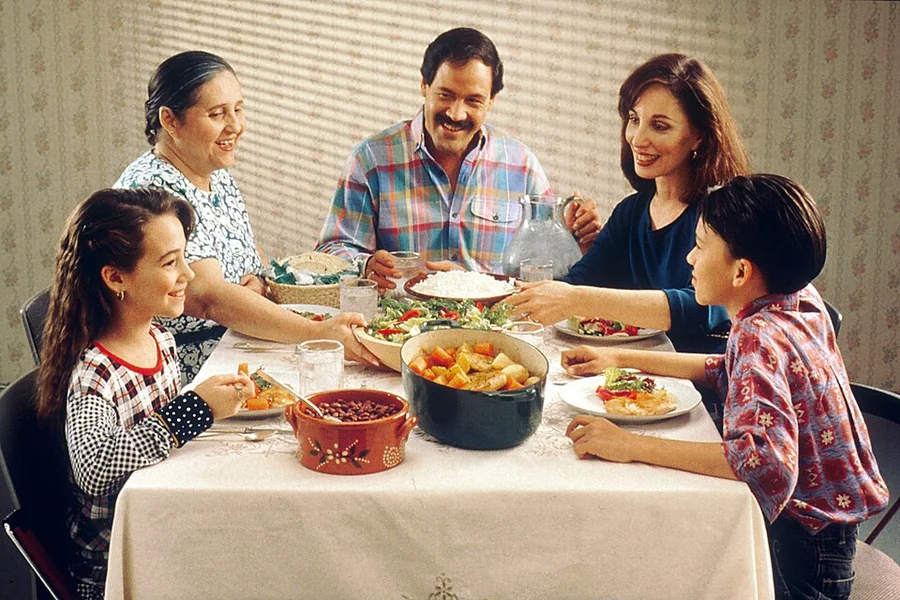

In the first picture I can see a big family sitting around a table, probably at Sunday lunch. There are three generations: grandparents, parents and several children. Everyone is talking and passing dishes around, so the atmosphere looks noisy but warm.
The second photo shows a young man eating alone at a desk, with a laptop open in front of him. He is probably a university student living away from home, or someone working late.
The biggest difference is whether eating is a social activity or not. In the first picture the meal is an occasion: the family use it to catch up with each other. In the second one, eating is just something the person does while doing something else.
There are advantages on both sides. A family meal strengthens relationships and it's usually healthier, because someone actually cooks. On the other hand, eating alone is flexible — you don't have to fit into anyone else's timetable.
In my family we always have dinner together on weekdays, and although I sometimes find it annoying when I'm in a hurry, I think I would miss it a lot if it stopped.
8. Gyakori hibák
| Hibás | Helyes | Miért? |
|---|---|---|
| We are four in the family. | There are four of us in the family. | A létszámot there is/are + of us fejezi ki. |
| My mother is cooking every day. | My mother cooks every day. | Szokás → Present Simple, nem Continuous. |
| I have a brother and a sister-in-law brother. | I have a brother and a brother-in-law. | A -in-law utótag önmagában áll. |
| She is my cousin girl. | She is my cousin. | A cousin nemtől független. |
| I must to make my bed. | I have to make my bed. / I must make my bed. | A must után nincs to. |
| My parents are divorced since 2015. | My parents have been divorced since 2015. | Tartós állapot a múlttól máig → Present Perfect. |
Kulcsfogalmak
- Immediate family vs. extended family — szűk család (szülők, testvérek) és tágabb család (nagyszülők, unokatestvérek, sógorság).
- Nuclear family — kétgenerációs család: szülők és gyerekeik, nagyszülők nélkül.
- Single-parent family — egyszülős család; a témakör érzékeny, semleges megfogalmazást kíván.
- Division of labour — munkamegosztás; a házimunka elosztása a családon belül.
- Household chores — házimunkák gyűjtőneve.
- Labour-saving device — háztartási gép, amely csökkenti a házimunkára fordított időt.
- To take turns — felváltva csinálni valamit; a legfontosabb szerkezet ebben a tételben.
Összegzés
- A tétel a családszerkezetet és a családon belüli munkamegosztást kéri; mindkettőre készülj konkrét példákkal.
- A létszámot mindig így mondd: There are … of us in the family.
- Tanuld meg a rokonságneveket, különösen az in-laws csoportot és azt, hogy a cousin nemtől független.
- A házimunkákra legyen készen legalább nyolc kifejezésed, és mondd őket egyetlen összefüggő mondatban.
- A szokásokra Present Simple jár (my mother cooks), nem Continuous.
- A szituációban javasolj (Shall we…?, How about…?), alkudj meg, és zárd le a megegyezést.
- A képösszehasonlításnál nevezd meg a fő különbséget, sorolj érvet mindkét oldalra, majd mondj saját véleményt a családodból vett példával.